Tuesday, 2 April 2013

Sunday, 24 February 2013
Culture of Indian people : Mata Vaishno Devi Temple
Culture of Indian people : Mata Vaishno Devi Temple
Wednesday, 30 January 2013
Revolt of 1857
 One of the primary and severe outbursts of resentment against the British rule came in the form of the Indian revolt of 1857. This revolt followed the battles of Plassey and Buxar and the main cause was resentment against setting up of British rule in Bengal.
 It is called the first war of independence by many historians though it is a debatable topic. The British historians termed it Sepoy Mutiny and Jawaharlal Nehru called it a feudal revolt which was much more than just a Sepoy Mutiny. Read further about the causes of revolt of 1857 in India.
 The revolt was basically started by the soldiers who worked for the East India Company and later was spread across the country by peasants, artisans and soldiers who sacrificed their lives for the sake of others. Different religions of India came together and fought united for one cause.
There were many different reasons for the outbreak of the revolt of 1857. Exploitation by the British, imposing of their faith forcefully on Indians, etc. were just some causes. Some of the other causes are discussed below.
Wednesday, 9 January 2013
Mata Vaishno Devi Temple
 One of the most visited pilgrimage destinations in the country and a revered site for Hindus, Vaishno Devi is located in the northern state of Jammu and Kashmir. The hills of Vaishno Devi are home to the famous Mata Vaishno Devi Temple, and the nearest town is Katra.
 Located at an altitude of 5200 feet above sea level and at a distance of approximately 14 kilometres from Katra, this is the second most visited religious site in the country. More than eight million devotees visit the temple every year.
The Shrine of Mata Vaishno Devi which is a narrow hilly cave is in a part of the lower Himalayas called Tirkuta Hills. The shrine contains images of three deities – Mahakali, Mahalakshmi and Mahasaraswati who are all reincarnations of Goddess Durga. The Mata Vaishno Devi Temple is acknowledged as one of the Shakti Peeths of Goddess Durga.
To visit the shrine one has to trek up the mountains. The original cave is quite narrow and takes time to reach the Sanctum Sanctorum. A new tunnel has been constructed, which is 200 metres long to facilitate the large influx of pilgrims visiting the destination for Darshan. However, the original cave is open for devotees during the lean season, traditional festivals or ritualistic occasions.

Earlier, a visit to Vaishno Devi was done on foot and devotees walked to the caves of Mata Vaishno Devi at a distance of 61 km from Jammu which was quite strenuous. Even now, many devotees prefer to walk, although carts and horses are also available to carry visitors to the mountains. Helicopter services are available which shuttle devotees to the shrine on a daily basis.
 Apart from the shrine of Mata Vaishno Devi, there are also quite a few other pilgrimage sites on the way, like the Bhumika Temple, Kalika Temple, Shiva Goompha, and Ban Ganga Temple with the spring of the holy river Ban Ganga.
Wednesday, 2 January 2013
The Kumbh Mela
.jpg)
The highlight feature of the Kumbh Mela is the bathing ceremony (snan). Millions of people travel across the globe to take a dip inthe Ganga, Yamuna and Saraswati during the festival as it is believed by doing so one gets free from the baggage of sins committed in his lifetime and also attains salvation which is freedom from the cycle of birth and death.
 The Vedic Scriptures account for several other reasons to take bath in Holy Rivers like Ganges, Yamuna, Godawari and Narmada. The bathing ceremony is the most auspicious activity in this festival apart from the enlightenment one receives through spiritual discussions with the saints.
 In Vedic culture, every river is personified as a deity and the water stream is interpreted as the material manifestation of that personality. Rivers are deified as mothers as they are a source for human existence. River Ganga is one of the most special rivers as it is believed to come directly from the ocean of milk by washing the lotus feet of Lord Vishnu. Bathing in the holy waters of Ganga is believed to be most auspicious at the time of Kumbh Mela.
Republic Day

Republic Day is celebrated every year on 26 January to commemorate the date and moment when the Constitution of India came into effect.it didn't have a permanent constitution of its own and instead were functioning under the laws enacted and implemented by the British. And after many amendments the Constitution was approved and accepted on November 26, 1949 that came into force in a full-fledged fashion from on 26 January, 1950. Thus, Republic Day celebration is the moment to remember the coming of the Constitution into effect.

On Republic Day, martyrs and heroes who showed courage and bravery for country's sake without bothering their own lives is also remembered and conferred prestigious and significant awards including Kirti Chakra and Ashok Chakra are conferred on the event by the President. Since 1950, for Republic Day celebrations India has been inviting guests of high dignitaries of another country as the state guest of honour.

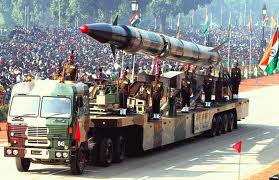.jpg) The festivity of Republic Day concludes officially with the intriguing Beating Retreat ceremony on the evening of 29th January. This enthralling ceremony is performed by the military, the Indian Air Force, India Navy and India Army in the Raisina Hills, New Delhi, in front of the President of India as the Chief Guest.
The festivity of Republic Day concludes officially with the intriguing Beating Retreat ceremony on the evening of 29th January. This enthralling ceremony is performed by the military, the Indian Air Force, India Navy and India Army in the Raisina Hills, New Delhi, in front of the President of India as the Chief Guest.Tuesday, 1 January 2013
Jagannath Temple
 Jagannath Temple is one of the most renowned as well as the biggest temples of Orissa. Established in the 12th century, the temple is dedicated to Lord Jagannath (Lord Krishna), Lord of the Universe. The credit for laying the foundation of the Jagannath temple of Puri goes to Raja Ananta Varman Chodaganga Dev.
The temple is located at a distance of 60 km from Bhubaneswar, on the coast of Bay of Bengal, and is greatly revered by the devotees following the Vaishnava traditions.

Situated in the heart of the holy city, the temple is visited by devotees from farthest corners of India as well as the world. It exudes splendor and its tall spires lend it a magnificent aura. The walls are embellished with exquisite carvings.
The pillars that provide support to the temple are adorned with pictures depicting the life of Lord Krishna. In the list of the most splendid monuments of Orissa, Jagannath temple occupies a supreme position.

 One of the most popular attractions of the Jagannatha Temple of Puri comprises of its Rath Yatra that is organized every year. It is basically a chariot festival, where idols of Lord Jagannath, Lord Balabhadra and Goddess Subhadra, the main deities of Srimandir, are taken to the Gundicha temple in bejeweled chariots and are brought back to the mandir in the same way.
Tuesday, 18 December 2012
Pongal

Seventy per cent of India's population lives in villages, and a vast majority of people solely depend on agriculture. As a result, we find that most Hindu festivals are directly or indirectly linked to agriculture and related activities.
 Pongal is one such big festival, celebrated every year in mid January - mostly in the south of India and especially in Tamil Nadu - to mark the harvest of crops and a special thanksgiving to God, the sun, the earth and the cattle.
Pongal is celebrated during the same time as 'Bhogali Bihu' in the North Eastern State of Assam, Lohri in Punjab, 'Bhogi' in Andhra Pradesh and 'Makar Sankranti' in the rest of the country, including Karnataka, Maharashtra, Uttar Pradesh, Bihar and Bengal.

Pongal is directly associated with the annual cycle of seasons. It not only marks the reaping of the harvest, but also the withdrawal of the southeast monsoons in southern India. As the cycle of season rings out the old and ushers in the new, so is the advent of Pongal connected with cleaning up the old, burning down rubbish, and welcoming in new crops.

Baisakhi Festival

Baisakhi is a seasonal festival with a special accent. It is celebrated all over the State on the first of Baisakh. This is the time when harvest is gathered in and the farmer exults in the fulfillment of his year's hard work.

Many fairs in the Punjab are held near the tombs and shrines of pirs. These fairs must have originated in a spirit of devotion to those saints and sages. The most famous among such fairs are the Chhapar fair, the Jarag fair, and the Roshni fair of Jagranyan.
Baisakhi marks the beginning of New Year, particularly in the northern part of India. It is among the few Indian festivals that have a fixed date. Baisakhi is always on April 13th. In Kerala, Baisakhi is called as "Vishu" and in Tamil Nadu, it is celebrated as "Puthandu".


In Punjab (the land of Green Revolution) particularly and in the northern belt of India in general, farmers perform their own prayers and rejoice. For on this day, they commence cutting their harvest.
The fields can be seen full of nature's bounty. Dressed in their typical folk attire, both men and women, celebrate the day with Bhangra and Gidda. Sweets are distributed, old enmities are forgiven and life is full of joy, merriment and everyone seems to belong.
The Kedarnath
 Kedarnath is a holy Hindu town located in Uttarakhand in India. It is one of the Char Dhams located in the Himalayas at a height of 3584m above sea level near the head of Mandakini River. It is a very popular destination for all Hindu pilgrims of all over the world. The Kedarnath temple lies amidst the majestic snow-capped Himalayan ranges and is thronged by thousands of tourists each year.
 The extreme weather condition of Kedarnath prompts the temple to remain open from the end of April to the beginning of November. It is one of the twelve Jyotirlingas of Kedar or Lord Shiva. In Kedarnath alone there are about more than 200 shrines dedicated to Lord Shiva.
Lord Shiva took refuge in Kedarnath in the form of a bull and dived into the ground leaving his hump on the surface. The other four parts of Lord Shiva fell at Tungnath, Rudranath, Madhmaheshwar and Kapleshwar. Kedarnath along with these four are also described as Panch Kedar. The inner walls of the temple have various deities sculpted on it. The scenes also tell mythological stories.
 You can reach Kedarnath only after a trek of 14km through a paved road from Gaurikund. You can take horse or ponies to climb up the steep path. Gaurikund is connected by road from Haridwar, Dehradun, Rishikesh and some other regions of Uttarakhand. The nearest airport is Jolly Grant in Dehradun while the nearest station is Rishikesh.
Sunday, 16 December 2012
Pushkar Festival

Pushkar is a sacred town for the Hindus, situated 11 kms to the North-West of Ajmer. The charm of this sleepy, lakeside settlement so captivated the great Indian poet, Kalidas, that it found a place in his classic, Abhigyan Sakuntalam.
The Great Hindu epics of Mahabharat and Ramayana make references to this religious place regarded to be Adi Tiratha. Evidence points to its having existed since the Fourth century B.C. Lake in the inhospitable surroundings of a desert is no less than a miracle.
 Braham Temple (the only temple of Lord Brahma), Savitri Temple, Varah Temple, Pushkar Lake, Ghats, Apteshwar Temple, Rangnath Temple, Anasagar Lake, Rose Gardens, etc are prime attractions of Pushkar It also provides vacationers wonderful opportunity to indulge in exciting activities like camel safari ride on sand dunes of Thar Desert, trekking on picturesque hills, etc.
Pushkar is also famous for its annual Pushkar Camel Fair. During this festival entire Pushkar comes alive. Visitors have wonderful opportunity to see trading of cattle/animals in the oldest form as barter system and several cultural shows depicting Rajasthani culture & tradition.
 According to Hindus faith, gods releases a swan with a lotus in its beak (mouth) and let it fall on the earth where the Lord Brahma would perform a grand Yagna. Lord Brahma performed penance here for 60,000 years to have glimpse of Radha Krishna. The place where the flower of lotus fell was called Pushkar.
The Badrinath temple

 Badrinath temple is the most accessible and thus most popular of the Char Dham. You'll find this temple, dedicated to Lord Vishnu, surrounded by a rather untidy village and overshadowed by the towering, snow-topped, Nilkantha peak
 Badrinath temple is commonly visited as a day trip from the unappealing town of Joshimath, reached by a precarious mountain road from Rishikesh. The route is Haridwar-Rishikesh-Devprayag-Srinagar (not the one in Kashmir!)-Rudraprayag-Joshimath. To get to Joshimath, you can either get a bus from Rishikesh or Haridwar. The journey will take around 10-12 hours, and buses leave around every half hour early in the mornings from 4 a.m. to 7 a.m.
The last 11 kilometers to Badrinath is the most spectacular part of the journey. The rise is steep, and a view of the entire Badrinath valley is laid out below.
 If you feel that you want to take some time to appreciate Badrinath temple and its surroundings, there are plenty of accommodations on offer. The Sarovar Portico is the best, and costliest, option. Otherwise, the GMVN Tourist Bungalow is the preferred option for those on a budget.
The Govardhan Puja
 The fourth day of Diwali celebrations is 'Padwa' or 'Varshapratipada'. In the North India, it is called as Govardhan Puja. This pooja is performed with great zeal and enthusiasm and in the states of Punjab, Haryana, Uttar Pradesh and Bihar. In this pooja, there is a tradition of building cow dung hillocks, which symbolize the Mount Govardhan, the mountain which was once lifted by Lord Krishna.
After making such hillocks people decorate them with flowers and then worship them. They move in a circle all round the cow dung hillocks and offer prayers to Lord Govardhan. Read on this article to explore more about the Govardhan Puja.
Govardhan Puja Legends

'Govardhan' is a small hillock situated at 'Braj', near Mathura. The legends in 'Vishnu Puraan' have it that the people of Gokul used to worship and offer prayer to Lord Indra for the rains because they believed that it was he who sent rains for their welfare but Lord Krishna told them that it was Mount Govardhan (Govardhan Paevat) and not Lord Indra who caused rains therefore they should worship the former and not the latter.

Tuesday, 11 December 2012
Onam Festival
 Onam is the most popular festival of Kerala (a southern coastal state of India). This is a Hindu festival, celebrated with a great enthusiasm throughout Kerala for a period of ten days. Every year this festival falls on the Malayalam month of Chingam - between August and September and also known as the harvest festival of Kerala.
.jpg) Onam is one of the most ancient Hindu festivals which is still celebrated with a great devotion. Onam marks the homecoming of King Mahabali, a legendary king, who ruled Kerala in ancient times. That period was believed to be the golden age of Karala, people were happy, free from harm and complete harmony and prosperity was there. This golden age ended when Vamana (an avatar of Lord Vishnu)
Onam is one of the most ancient Hindu festivals which is still celebrated with a great devotion. Onam marks the homecoming of King Mahabali, a legendary king, who ruled Kerala in ancient times. That period was believed to be the golden age of Karala, people were happy, free from harm and complete harmony and prosperity was there. This golden age ended when Vamana (an avatar of Lord Vishnu)
 Onam is celebrated for ten days - Atham is the first day and Thiruvonam is the final day of the celebration. People wear new clothes, decorate their houses and put flower carpet called 'Pookalam' in front of their houses, to welcome the King Mahabali. Special pujas are offered in the temples in early morning and younger members take blessings and gifts from the elder members of the family.
During Onam traditional rituals are performed followed by a lavish feast with twenty-one homemade curries and sweet payasam on plantain leaf. Spectacular Carnivals of elephants, fireworks, boat races, music and the famous Kathakalli dance are traditionally associated with this festival. The state government of Karala conducts Tourism Week celebrations in connection with Onam, showcasing Kerala's beauty and culture.
The Yamunotri

The Yamunotri temple lies close to the source of the Yamuna River, the second holiest river in India, which flows all the way down past the Taj Mahal. The temple is relatively undeveloped as it's the least visited of the Char Dham. However, there is a certain magic to be experienced from the pristine mountain air, running water, natural scenic beauty, and enthusiastic devotees. Pilgrims also get to enjoy a number of hot water springs in the vicinity of the temple.
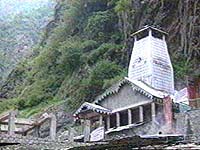 The same as Gangotri temple, Yamunotri temple opens every year on Akshaya Tritiya (an auspicious day in the Hindu calendar). It falls in the last week of April or first week of May. The temple also closes for the season on Diwali. On the day the temple opens, the Goddess is carried from the nearby village of Kharsali (said to be Yamuna's mother's home), installed in the temple, and duly returned when the temple closes.
The route by road is Haridwar/Rishikesh-Dehradun-Mussoorie-Naugaon-Barkot–Hanuman Chatti. The journey to the village of Hanuman Chatti, which is around 14 kilometers from the Yamunotri temple, takes around eight hours from Rishikesh and six hours from the hill station of Mussoorie.

Subscribe to:
Posts (Atom)